English
 Español
 Português


How Prediction Markets Work and When Prices Mislead
A prediction market looks deceptively simple: a YES share trades at $0.62, so people say the event has a 62% chance. That "price as probability" shortcut is useful, but it can also mislead if you ignore liquidity, fees, and the fine print of how an event gets resolved.
This guide explains how prediction markets work from the ground up, then zooms in on two beginner priorities: prediction markets vs betting markets, and prediction market strategies for beginners that focus on process over hype. Along the way, you'll see real examples, a practical checklist, and common traps that catch smart people who are new to this niche.
A prediction market is where individuals trade contracts based on outcomes of unknown future events.
Prediction markets in plain English
A prediction market is a marketplace for event-linked contracts. The most common design is binary:
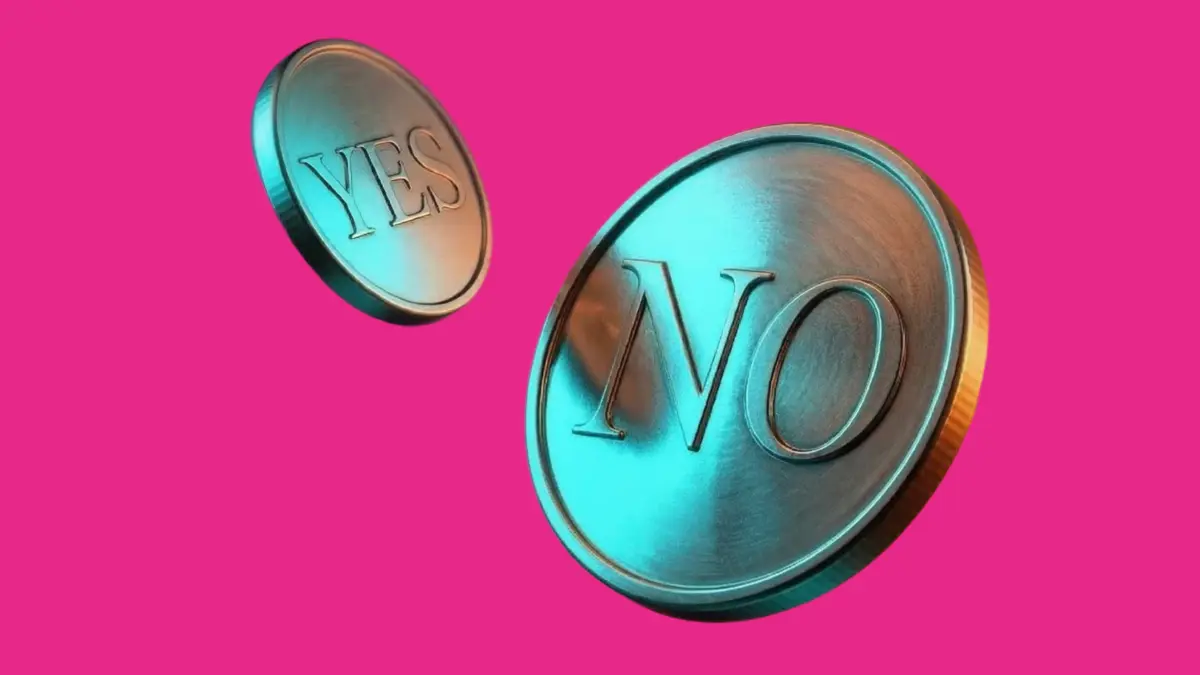
- YES pays $1 if the event happens, $0 if it doesn't
- NO pays $1 if it doesn't happen, $0 if it does
So if a YES share trades at $0.62, one rough interpretation is: "the market is pricing this at ~62%." Research often treats these prices as aggregating beliefs, with important caveats.
"Useful (albeit sometimes biased) estimates" is how one widely cited paper describes price-based probabilities.
That "biased sometimes" part matters. Prices can be distorted by thin trading, one-sided participation, or ambiguous resolution rules.
The building blocks that make a prediction market work
Contract design: what exactly is being traded
A well-designed market answers:
- What is the event?
- What is the deadline?
- What is the resolution source? (official report, audited result, published dataset)
- How is "YES" defined? (exact threshold, exact wording)
A sloppy market question is a slow-motion problem. Even if you "predict correctly," you can lose if the contract resolves differently than you assumed.
Price formation: order books vs automated market makers
Most platforms use either:
Order book markets
- Traders post bids and asks
- You can see spread and depth
- Great for understanding liquidity
Automated market makers (AMMs)
- A pricing formula adjusts as traders buy/sell
- Liquidity comes from pools rather than matching orders
- Can be smoother, but pricing behavior differs
Settlement: the moment that turns opinions into cash
At the end:
- The market stops trading
- The event is resolved according to stated rules
- Contracts settle at $0 or $1 (or multiple-outcome payouts)
Recent U.S. regulatory focus has centered on "event contracts" traded on prediction markets, including how markets should be designed and safeguarded.
Step by step: how prediction markets work in the real world
Here's the typical lifecycle.
1) Market opens with a clear resolution rule
Example market:
Will the U.S. CPI month-over-month print exceed 0.3% for April (released on May 15) per the Bureau of Labor Statistics?
Good features:
- Precise metric
- Precise date
- Precise resolution source
2) Traders buy and sell YES/NO shares
If YES trades at $0.47:
- Buying YES is betting the event will happen
- Buying NO is betting it won't
3) Information moves the price
Prices shift as:
- New data arrives (forecasts, leaks, related indicators)
- Traders rebalance exposure
- Liquidity changes (more participants, tighter spreads)
4) Market closes, resolves, and pays
If CPI prints 0.4%, YES settles at $1. If it prints 0.2%, YES settles at $0.
A profit example with real math
You buy 100 YES shares at $0.47. Cost: $47 (ignoring fees).
- If YES wins: payout $100 → profit $53 (before fees)
- If YES loses: payout $0 → loss $47
Prediction markets often feel "simple," but fees, spreads, and exit difficulty can change the real outcome.
When the "price equals probability" shortcut works, and when it doesn't
In liquid, well-specified markets, treating price as an approximate probability can be reasonable. The NBER paper that's frequently cited finds prices often track average beliefs, but not perfectly.
A quick reliability checklist
Before you trust a market price as a probability, check:
- Volume: Is there enough activity to prevent easy price pushing?
- Spread: Is it tight or wide?
- Depth: Are there real orders behind the best bid/ask?
- Resolution clarity: Could reasonable people disagree about the outcome?
- Time to expiry: Is there time for new information to enter the market?
Prediction markets vs betting markets
People mix these up because they look similar: both can pay out based on outcomes. The difference is usually in purpose, structure, and how the price behaves.
| Dimension | Prediction markets | Betting markets |
|---|---|---|
| Primary goal | Aggregate beliefs into a signal | Entertainment, risk-taking, bookmaking |
| Pricing mechanism | Market price from trading (often continuous) | Odds set by bookmaker, adjusted for risk |
| Information value | Often used as forecasting signal | Sometimes informative, often optimized for house risk |
| Typical structure | Exchange-style trading or AMM | Sportsbook-style odds |
| Arbitrage dynamics | Traders can correct mispricing if access/liquidity allow | Odds can reflect house margin and limits |
| Resolution focus | Contract definition is everything | Rules exist but often less central to the "signal" story |
Two nuances:
- Some betting markets can still contain information.
- Some prediction markets can behave like betting if liquidity is low or participation is skewed.
That's why regulation debates often revolve around whether these products are economic hedging tools or just gambling in new clothes.
Regulated event contracts and why beginners should care
In the U.S., some platforms frame prediction markets as regulated event contracts traded on a derivatives exchange overseen by the CFTC as a Designated Contract Market (DCM).
Regulation doesn't make an event contract "safe," but it can change:
- Disclosures and oversight expectations
- Enforcement pathways for fraud/manipulation
- Contract listing and integrity processes
It's also an active policy area right now:
- The CFTC withdrew a prior "Event Contracts" rule proposal in February 2026.
- The CFTC then issued an Advanced Notice of Proposed Rulemaking (ANPRM) in March 2026 seeking public comment on prediction market regulation.
- The CFTC's Enforcement Division also issued an advisory after cases involving misuse of nonpublic information and fraud tied to event contracts.
If you're learning the space, this matters because strategy and risk depend heavily on which rules apply.
The risks that hit beginners hardest
Beginners often assume the main risk is "being wrong." In practice, these are just as important:
Resolution risk
You predicted the event, but the contract resolves differently because the definition was narrower than you assumed.
Liquidity risk
You can't exit without moving the price against yourself.
Fee and spread drag
A small edge disappears after spread + fees.
Manipulation and "thin market" risk
Low-volume markets can be nudged to create misleading signals.
Information risk
You trade on a rumor; the official data arrives and flips the price instantly.
Prediction market strategies for beginners
This section focuses on repeatable habits, not high-risk tactics.
Strategy 1: "Read the contract, then price it"
Before you look at charts or social posts:
- Summarize the resolution rule in one sentence.
- List the only acceptable sources for resolution.
- Identify the exact time the market closes.
If you can't do that, don't trade that market.
Strategy 2: Trade only liquid markets until you have reps
A beginner-friendly filter:
- Tight spread
- Consistent volume
- Clear resolution source
Thin markets can make you "right" and still lose due to terrible execution.
Strategy 3: Use probability thinking, not vibes
Try this framework:
- Estimate probability (your number)
- Compare to market price (their number)
- Decide if the gap is worth costs and risk
Example:
- Your estimate: 55%
- Market YES price: 63%
- That's negative edge unless you have a strong reason the market is wrong
This is basically forecasting discipline disguised as trading.
Strategy 4: Size small and treat early trades as tuition
A simple sizing rule for beginners:
- Risk a fixed small amount per market (or a tiny percent of your bankroll)
- Avoid "double down" behavior
- Log every trade with the reason and the exit plan
Strategy 5: Avoid "fast click" trading around announcements
Data releases (CPI, rate decisions) create:
- Sudden spreads
- Slippage
- Whipsaws
If you want to trade event-driven moves, plan entries earlier and reduce size near the announcement.
Strategy table: beginner-friendly approaches
| Strategy | Core idea | Best conditions | Common mistake |
|---|---|---|---|
| Value gap | Your probability vs market price | Clear contract, high liquidity | Overconfidence |
| Pre-event positioning | Enter before volatility spikes | Tight spreads days before | Chasing late |
| Hedge real exposure | Offset real-world risk | You have actual exposure | Treating hedge as profit play |
| "Do nothing" filter | Skip unclear markets | Ambiguous resolution | Forcing trades |
A practical example: building a beginner trade plan
Market: "Will the central bank raise rates at the next meeting (per official statement)?"
You create a plan:
- Contract check: official statement is the only source
- Key dates: meeting date, expected leaks/briefings
- Entry rule: if YES stays below 0.40 and my estimate stays above 0.48
- Exit rule: take profits if YES hits 0.55 before the meeting, cut if news invalidates thesis
- Risk cap: $25 maximum loss
This is boring in a good way. Boring is survivable.
A 2-week learning routine that builds real skill
If you want competence, not adrenaline, do this for 14 days:
Day 1 to 3:
- Read 10 market rules and rewrite each in one sentence
- Identify the resolution source and close time
Day 4 to 7:
- Track 5 liquid markets daily
- Write your probability estimate and note why it changed
Day 8 to 14:
- Place one tiny "practice" position only when your checklist is green
- Review outcomes and note where your process failed (contract, liquidity, timing)
If you want to make this systematic, build a short education sprint: one module on market mechanics (contracts, spreads, settlement), one module on probability estimation, and one module on beginner execution. Then apply it by journaling 10 markets end-to-end: contract summary, probability estimate, entry/exit, and post-mortem. That routine teaches more than scrolling hot takes.
FAQ
Are prediction markets the same as betting markets?
They overlap in outcome-based payouts, but prediction markets vs betting markets differ in pricing mechanics, purpose, and how the market signal is produced. In prediction markets, the traded price is often treated as an information signal; in betting markets odds are typically managed by a bookmaker.
Does the price always equal the true probability?
No. Research suggests prices can be useful yet biased estimates of average beliefs, especially when liquidity is weak or participants are skewed.
What is the biggest beginner mistake?
Ignoring the resolution rule and liquidity. You can be correct about the real-world event and still lose money if the contract resolves differently than you assumed or if spreads and fees erase your edge.
Are prediction markets regulated in the United States?
Some platforms present their products as regulated event contracts. Kalshi states it is regulated by the CFTC as a Designated Contract Market. Regulatory policy is evolving, with the CFTC issuing an ANPRM in March 2026.
Can people trade on nonpublic information?
Enforcement risk exists. The CFTC's Enforcement Division issued an advisory after cases involving misuse of nonpublic information and fraud in prediction markets.
What are simple prediction market strategies for beginners?
Stick to liquid markets, summarize the contract in one sentence, estimate probabilities explicitly, size small, avoid announcement-time chasing, and keep a trade journal.
Related guides: How to make money with prediction markets · What are prediction markets?
This article is educational and is not financial, investment, or tax advice. Crypto assets are volatile and carry risk; do your own research and consider a licensed professional before making decisions. About our editorial process.