English
 Español
 Português


Cold wallet vs hot wallet: how to keep your crypto safe
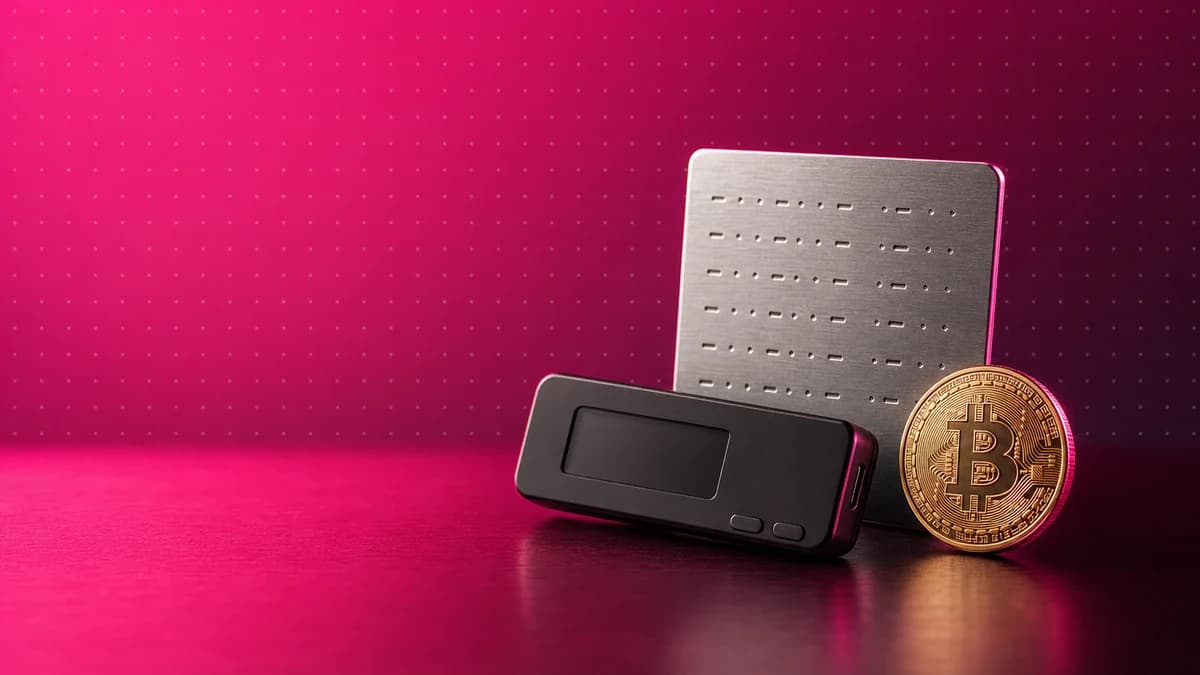
A hot wallet is a crypto wallet that is connected to the internet, such as an exchange account, a phone app or a browser extension. A cold wallet keeps your private keys offline, usually on a small hardware device. Hot wallets are convenient for money you trade or spend; cold wallets are safer for savings you rarely touch. Both are only as safe as the keys and the seed phrase behind them.
This guide explains what a wallet really stores, how hot and cold wallets compare, who holds the keys when you use an exchange, how to protect a seed phrase, and how to set up a cold wallet without the most common mistakes.
What a crypto wallet actually stores
A crypto wallet does not hold coins. Your coins are recorded on the blockchain, and the wallet stores the private keys that let you move them.1 If blockchains are new to you, start with our guide to what a blockchain is.
- Private key. A secret code that authorizes transactions — think of it as the password to your wallet. It cannot be changed, and if you lose it without a backup, you lose access to the crypto for good.1
- Public key and address. The code other people use to send you crypto — like an email address. Sharing it is safe; it cannot be used to spend your funds.1
Hot wallet vs cold wallet at a glance
| Hot wallet | Cold wallet | |
|---|---|---|
| Connection | Online: exchange account, phone or desktop app, browser extension | Offline: hardware device, or a paper or metal backup |
| Best for | Small amounts, trading and payments | Long-term savings |
| Main risks | Hacks, phishing and malware | Loss, damage or theft of the device or the backup |
| Cost | Usually free to set up | A hardware device costs money |
| Convenience | High: send in seconds | Lower: you need the device to approve each payment |
The SEC’s investor bulletin sums up the trade-off: hot wallets are convenient but exposed to cyberthreats, while cold wallets are less convenient but generally more secure because they are not connected to the internet.1
Hot wallets: convenient, but always online
Hot wallets come in three common forms:2
- Exchange accounts, where the exchange holds the keys for you (more on custody below).
- Mobile and desktop apps, where the keys live on your phone or computer.
- Browser extensions, popular for using decentralized apps.
Because the keys sit on a device that is online, a hot wallet is only as safe as that device and your habits. Malware, fake apps and phishing links are the usual ways funds go missing. A good rule from Bitcoin.org: treat a hot wallet like the cash in your pocket, and keep only small amounts there for everyday use.3
Cold wallets: safer for savings
A hardware wallet is a small device that keeps your private keys offline and signs transactions inside the device, so the keys never touch your internet-connected computer. Ethereum.org calls hardware wallets the most secure option for storing private keys.4 You connect the device only when you want to approve a payment.
Cold storage has its own risks. A device can be lost, damaged or stolen, and without a backup that can mean losing the crypto permanently.1 That backup is the seed phrase.
Who holds the keys: exchange custody or self-custody
Besides hot or cold, there is a second choice: who manages the keys.1
- Third-party custody. An exchange or a custody provider holds the keys for you. Custodians can keep customer funds in hot wallets, cold wallets or both. You do not manage a seed phrase, but if the custodian is hacked, shuts down or goes bankrupt, you may lose access to your crypto.1
- Self-custody. You hold the keys yourself, in a hot or a cold wallet. You have sole control — and sole responsibility. If your keys and your backup are lost, nobody can restore them.1
Neither option is right for everyone. If you choose an exchange, research it first: how it is regulated, how it stores customer assets and what happens if it fails. Our guide to how crypto exchanges work explains what to check.
Seed phrases: the master key to your wallet
When you create a self-custody wallet, it usually shows you a seed phrase — also called a recovery phrase or mnemonic phrase. Under the common BIP-39 standard, it is a list of 12 to 24 words.5 If your phone breaks or your hardware wallet is lost, you can type those words into a new wallet and restore everything.1
That power cuts both ways: anyone who has your seed phrase controls your crypto, from anywhere, without your device. That is why you should never share it with anyone, for any reason.4
How to store a seed phrase:
- Write it down by hand on paper, or stamp it on a metal backup that survives fire and water.
- Keep it offline. No photos, screenshots, notes apps, email or cloud storage — stealing keys from the cloud is a common attack.4
- Keep copies in more than one secure place, so that one fire or burglary cannot wipe you out.3
- Never type it into a website or an app, unless you are restoring your own wallet on a device you trust.
Some wallets also let you add an optional passphrase on top of the seed phrase (sometimes called a “25th word”). It adds protection, but if you forget it, the funds cannot be recovered — so it is best left to experienced users.5
Which wallet should you use?
A simple rule works for most people:
- Money you trade or spend: a hot wallet or an exchange account, protected with a strong password and two-factor authentication.1
- Savings you will not touch for months: a cold wallet.
- Both: many people keep a small spending balance in a hot wallet and their savings in a cold wallet.
Before you decide, ask yourself the questions the SEC suggests. Are you comfortable setting up and maintaining a wallet? Do you want sole responsibility for your keys? What will the device and the transaction fees cost?1
If your balance is small, a hardware wallet may not be worth its price yet. An exchange account or a well-secured app can be enough until your savings grow.
How to set up a cold wallet safely
- Buy from the manufacturer or an authorized seller. Avoid used devices and marketplace listings.
- Set it up yourself. If a device arrives with a seed phrase already written on a card, do not use it — the seller may know the words.
- Write down the seed phrase on paper when the device shows it, and never type it into a computer or a phone.
- Choose a strong PIN for the device.
- Send a small test amount first, and confirm that you can see it and send it back.
- Store the backup away from the device, in a safe place.
Frequently asked questions
Is a cold wallet worth it for small amounts?
Often not. A hardware wallet costs money, and for a small balance a well-secured exchange account or app may be enough. A cold wallet makes more sense as your savings grow.
Can a cold wallet be hacked?
It is much harder, because the private keys stay offline. The bigger risks are human: fake devices, phishing for your seed phrase, and losing both the device and its backup.
What happens if I lose my hardware wallet?
If you still have your seed phrase, you can restore your wallet on a new device. Without the seed phrase, the crypto is lost permanently.
Is it safe to keep my seed phrase in a photo or in the cloud?
No. Photos and cloud accounts can be hacked, and stealing keys from the cloud is a common attack. Keep the seed phrase offline, on paper or metal.
Is an exchange account a hot wallet?
It works like one, because you reach it online. But the exchange holds the keys for you and can keep customer funds in hot wallets, cold wallets or both. You protect your access with a password and two-factor authentication instead of a seed phrase.
Related guides: what Bitcoin is · how to avoid crypto scams
Risk warning. Crypto assets are volatile and carry risk. Crypto transactions are irreversible, and lost keys cannot be recovered. This article is for educational purposes only and is not financial, investment or security advice.
Sources
- U.S. Securities and Exchange Commission, Office of Investor Education and Assistance, "Crypto Asset Custody Basics for Retail Investors – Investor Bulletin" (Dec. 12, 2025). https://www.investor.gov/introduction-investing/general-resources/news-alerts/alerts-bulletins/investor-bulletins/crypto-asset-custody-basics-retail-investors-investor-bulletin-0 ↩
- Ethereum.org, "Ethereum wallets." https://ethereum.org/en/wallets/ ↩
- Bitcoin.org, "Secure your wallet." https://bitcoin.org/en/secure-your-wallet ↩
- Ethereum.org, "Ethereum security and scam prevention." https://ethereum.org/en/security/ ↩
- Bitcoin Improvement Proposal 39 (BIP-39), "Mnemonic code for generating deterministic keys." https://github.com/bitcoin/bips/blob/master/bip-0039.mediawiki ↩
This article is educational and is not financial, investment, or tax advice. Crypto assets are volatile and carry risk; do your own research and consider a licensed professional before making decisions. About our editorial process.